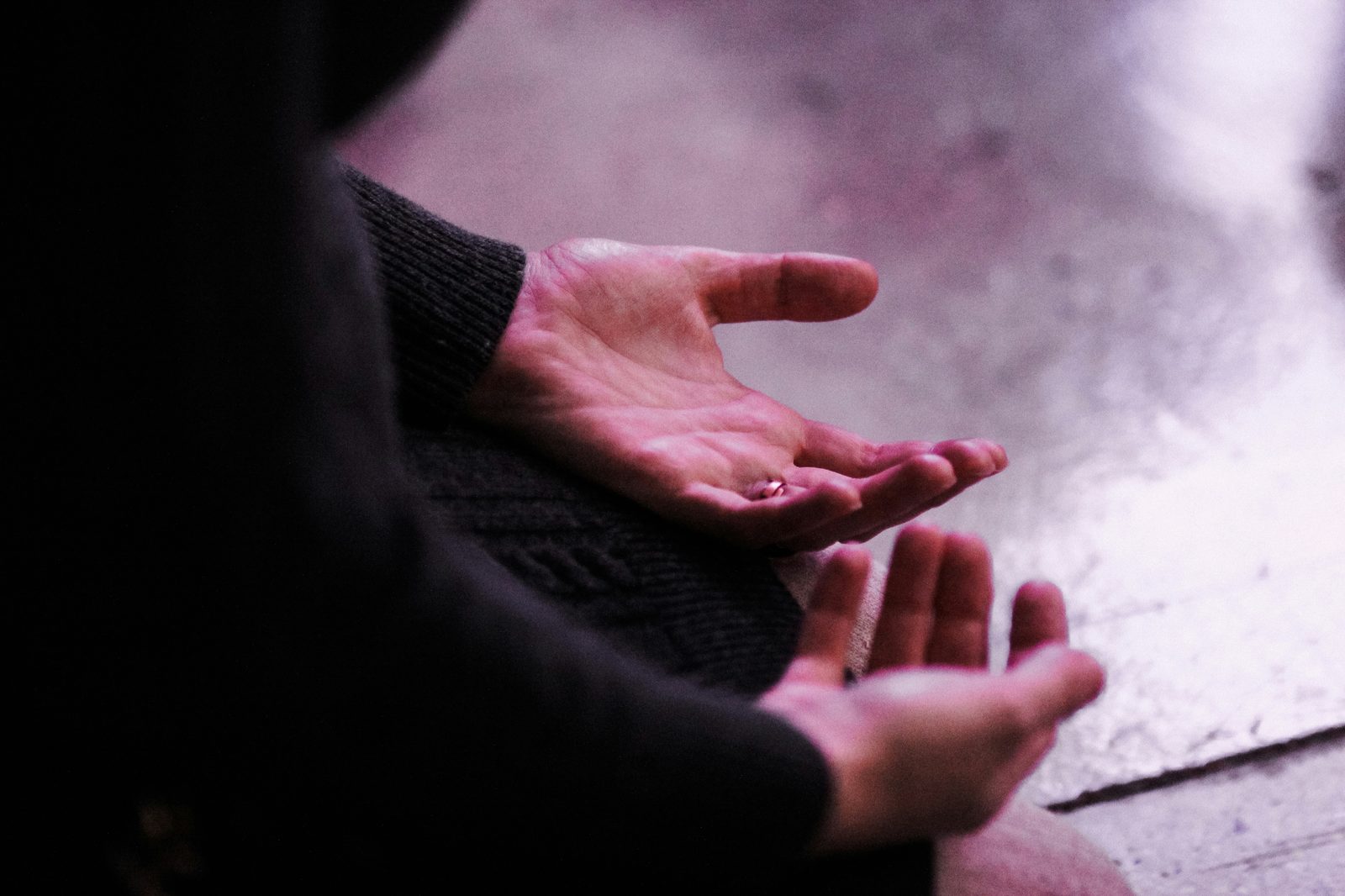
If you've typed "prayer for beginners christian" into a search bar looking for a starting point, most of what comes back hands you a script: words to recite, postures to hold, verses to memorize, rules about the right time of day, all before you're apparently allowed to begin. None of that is where you actually start.
You start with the urge itself. That pull to say something out loud, or in your head, to whatever's listening. Maybe it hit you at 2 a.m., staring at your bedroom ceiling, unable to sleep, thoughts circling with doubt and anxiety. Maybe it was smaller — sitting in the car after a bad appointment, unsure what to say. Or standing in your kitchen at 6 a.m. before the kids wake up, feeling like something needs saying. That urge is already prayer. You don't need permission to follow it further.
Here's what nobody tells beginners: prayer isn't a performance you get graded on. God isn't scoring your vocabulary. The Psalms are full of writers who show up angry, confused, begging, and sometimes accusing God of abandoning them entirely. If that's allowed in scripture, it's allowed in your bedroom at midnight.
"My voice shalt thou hear in the morning, O Lord; in the morning will I direct my prayer unto thee, and will look up."
Psalm 5:3
David wrote that before he had a theology degree or a system. He just talked, first thing, before the day could talk him out of it.
Start with what's true right now
Skip the formal opening. Just say what's actually happening. "I don't know if you're there. I'm scared about the biopsy results." Or: "Thank you for my kid falling asleep without a fight tonight." Or nothing that specific — just "help," repeated until it stops feeling like a word and starts feeling like a breath.
A structure that works for a first prayer, and works for the thousandth one too: say what you're grateful for, say what's actually wrong, ask for something specific, then stop talking and sit for thirty seconds before you get up. That last part is the piece beginners skip. Prayer isn't only talking. Leaving room for quiet is half of it.
You don't need the right words
Catholic tradition has the rosary. Protestant tradition favors spontaneous prayer. Orthodox tradition repeats the Jesus Prayer through the day. Jewish prayer runs on fixed liturgy recited three times daily. All of these took centuries to formalize, and all of them started the way yours will: someone talking honestly to God without a script.
If you want language to borrow while you build your own, the Lord's Prayer (Matthew 6:9-13) gives you a six-line template: praise, surrender, provision, forgiveness, protection, close. Pray it slowly, one line at a time, and stop wherever a line hits something real in your life that day. You're allowed to sit on "give us this day our daily bread" for five minutes if that's the line that matters right now.
What if I'm not sure I believe enough yet?
This stops more beginners than any theological question. You feel the pull to pray, but you're not sure you've earned the right, or that your faith is solid enough to count. It isn't a requirement. Some of the most honest prayers in the Bible come from people mid-doubt: a father telling Jesus "I believe, help my unbelief" in the same breath. You don't need certainty first. You need the willingness to talk before the certainty arrives, if it ever does in the tidy way you're picturing.
New believers often assume everyone else has a script memorized and a direct line that they're missing. They don't. Most people who've prayed for decades are still working it out one ordinary morning at a time, same as you're about to.
The habit matters more than the moment
One good prayer won't fix a hard season. A short prayer said daily will change how you move through one. That's the part most beginners get backwards. They wait for a big spiritual moment instead of building a five-minute habit around a fixed time of day.
Pick a trigger you already do every day: coffee brewing, the drive to work, lying down before sleep. Attach sixty seconds of prayer to it. Do that for two weeks and you won't need willpower anymore. You'll just do it, the way you already brush your teeth without deciding to. The rest of that mechanism, the why behind it and what to do when you miss a day, is covered in a separate piece on building a prayer habit.
"Let my prayer be set forth before thee as incense; and the lifting up of my hands as the evening sacrifice."
Psalm 141:2
That's a psalm written for the end of the day, when the light is going and you're worn thin from talking to everyone but God. Attach your evening prayer to the same lamp switch or the same last minute in bed, every night, until it needs no thought at all.
This is where an app can actually help, and where it can also get in the way. A lot of prayer apps hand you a feed to scroll or a library to sort through before you've said a word. Prayer Stone is a daily Christian prayer app for iOS that plays a calm narrated prayer while the words light up line by line, then tracks your streak on a simple monthly view so the habit becomes visible day by day. No feed, no ads interrupting the moment, just the prayer and a reminder set for whatever time actually works for your morning or your night. It also costs less than Hallow's $69.99/yr, without cutting the guided-audio experience down to get there. See how it compares to Hallow and the rest in a fair rundown of Christian prayer apps.
None of that replaces your own words. It gives you a floor to stand on until you don't need one.
Writing your first prayers down helps more than most beginners expect. Keep a notebook by the bed, or use the notes app on your phone. Jot down whatever's true that morning: something you're grateful for, something weighing on you, something specific you need, a line you'd rather not say out loud yet. Read last week's entries once a month. You'll see patterns in what you actually worry about, and you'll notice, eventually, which of those worries got answered and which just faded on their own.
When you don't feel anything
Expect this. Most days, prayer won't feel like anything in particular. No warmth, no clear sense of being heard, nothing dramatic. That's normal. It doesn't mean you're doing it wrong or that no one's listening. Christian tradition, across every branch of it, has always included long stretches of silence from God's end.
"Verily God hath heard me; he hath attended to the voice of my prayer. Blessed be God, which hath not turned away my prayer, nor his mercy from me."
Psalm 66:19–20
The writer says that after describing real trouble, not after a warm feeling arrived. Keep showing up anyway. The habit is the point, not the feeling underneath it.
FAQ
How do I start praying if I've never done it before?+
Say what's true right now, out loud or silently: what you're thankful for, what's actually wrong, one specific thing you're asking for, then thirty seconds of quiet before you get up. No memorized words required.
Do I need to kneel or use special words to pray?+
No. Posture and language are traditions, not requirements. Scripture includes prayers shouted, whispered, sung, and cried through tears. Say it the way it comes out.
How long should a beginner's prayer be?+
A minute is enough. Consistency matters more than length. A short prayer said every morning for a month builds a habit. One long prayer said once doesn't.
What if I pray and nothing happens?+
Most prayers don't produce a visible sign, and that's normal rather than a failure. Keep the practice going. Let the habit itself become the proof that something is taking root.
Prayer Stone guides you through it — a calm narrated prayer, words that light up line by line, and a streak that shows the habit taking hold.
Try Prayer Stone